
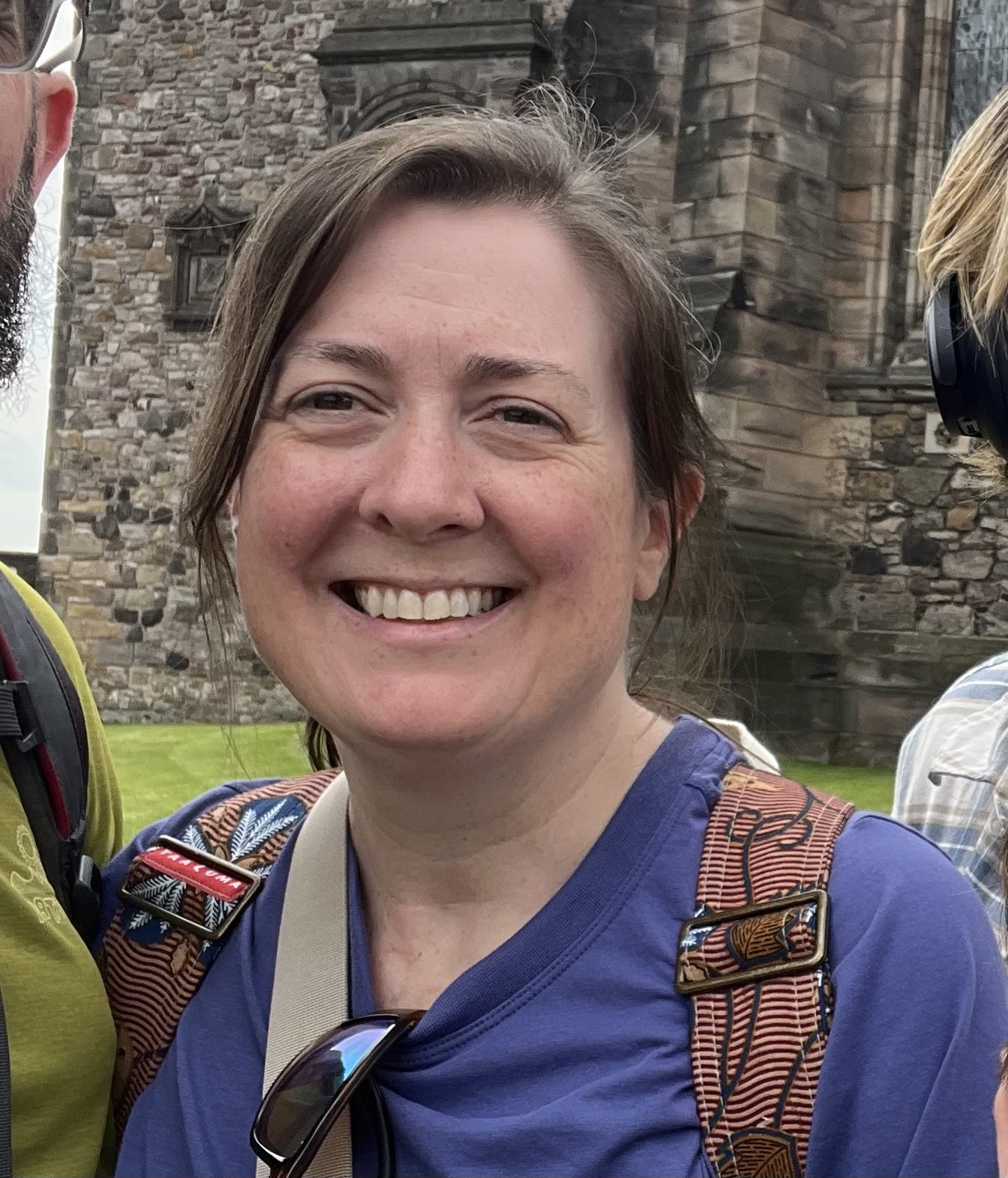
I was sitting in the lobby of my local car dealership waiting for an oil change when I
listened to a voicemail recording telling me of an incidental finding of a 1.8cm lung nodule on a
recent coronary calcium scan. The low bustling sounds of people typing on laptops, adjusting
their seat as they scrolled on cell phones, the voice of the cheery chef on the big screen TV
chopping carrots with glee were suddenly punctuated by a not-safe-for-print-in-a-newsletter
word that fell from my lips.
What followed after that voicemail was a flurry of patient portal messages, followup
appointments, labs, PET scan, and a biopsy via broncoscopy that yielded inconclusive results.
On October 9th, at the age of 46, I had a left lung segmentectomy at Duke hospital and the
suspicious lung nodule was biopsied and found to be stage 1 lung cancer. No further treatment
needed. I will be closely followed now with repeat CT imaging. Also, my thoracic surgeon took
the proactive step of genomic testing of the tumor and it was found to have an EGFR mutation.
This information will help inform future treatment options should I have a recurrence.
Although my personal journey with lung cancer began while waiting for an oil change that
day in May 2025 lung cancer has been affecting my life since early 2000s when my 54-year-old
mom was diagnosed with stage IV lung cancer. It was also an incidental finding and came as a
complete shock to everyone. My mom was a never-smoker who even by today’s standards
would not have qualified for any lung cancer screening. Our cancer stories are intertwined and
highlight both how far we’ve come and how much work there is to do in screening and treating
lung cancer.
With multiple rounds of treatments including participation in clinical trials that would go on
to inform better treatment options, mom lived to 57. During this time she was able to meet her
first two grandchildren and “get to know their little personalities.” Her journey forever impacted
the lives of those of us who knew and loved her.
Throughout her life, my mom did her best to instill in my sister and me the tools we
needed to live a healthy and happy life. After her diagnosis, this included the warning that we
would have to advocate for CT scans of our lungs throughout the rest of our lives since our
elevated risk due to strong family history was not enough to qualify for a lung cancer screening.
Over 20 years later it still isn’t.
I took her words to heart and over the years I would talk to my primary care doctor during
my wellness exams about my increased lung cancer risk and we worked within the system to
get occasional CT scans. The irony of having to advocate for this while being encouraged to get
breast and colon cancer screenings done was never lost on me.
I paid about $150 out of pocket for the coronary calcium scan that caught my lung cancer
in its earliest stage. This scan was ordered during one of those annual wellness exams after a
discussion of what all I was at increased risk for and what could be picked up on a coronary
scan.
At first it was like I could only allow myself to feel gratitude at my early cancer catch. I
think I felt guilty that I got to have what my mom did not. I am still processing the many emotions
surrounding my diagnosis and am thankful for organizations like the Lung Cancer Initiative that
provide support for lung cancer survivors. I find spending time in nature and surrounding myself
with supportive people to be very healing.
At least one of the clinical trials my mom participated in back in the early 2000s
contributed to the development of genomic-based treatments that have dramatically improved
the outcomes of those diagnosed with lung cancer today. I want our now-combined story to also
change the outcome for others who are falling through the cracks of lung cancer screening
parameters and boost the percentage of screenings completed by those who meet the current
criteria.
When I talk to people about my diagnosis I tell them my mom saved my life.