
Lung Cancer Awareness Month, Week 4
You’re not alone
November is Lung Cancer Awareness Month. For us at Lung Cancer Initiative, it is a month to honor every survivor, every care partner and every clinician and researcher working to change what a lung cancer diagnosis means.
It is also a month to say something that every person touched by lung cancer deserves to hear: you are not alone. Across North and South Carolina, a community of survivors and the people who love them is here, ready to welcome you.
Our tagline is Hope + Action, and this month we are leaning into both. Here is what the numbers tell us, who stands behind them and how you can be part of the community that turns awareness into action.

1 in 19: why awareness matters
About 1 in 19 men and women in the United States will be diagnosed with lung cancer in their lifetime, according to the American Cancer Society’s Cancer Facts & Figures 2026.
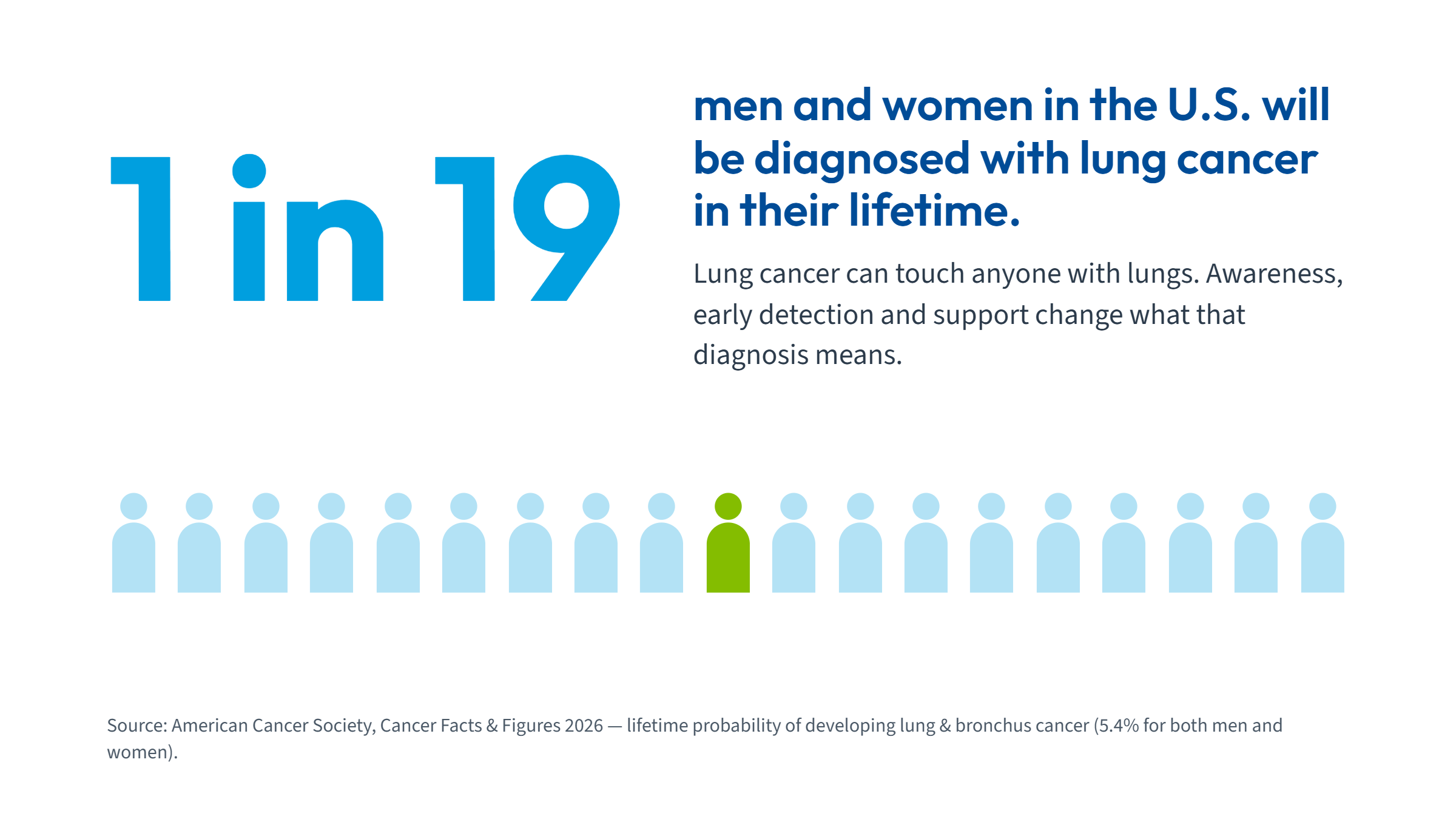
Lung cancer can affect anyone with lungs. That is exactly why awareness matters. When more people know the risks, talk with their doctors about screening and know where to turn for support, a diagnosis becomes something people face with information, care and community around them.
Close to home in the Carolinas
The American Cancer Society estimates that 13,430 people in the Carolinas will be diagnosed with lung cancer in 2026: about 8,880 in North Carolina and 4,550 in South Carolina.
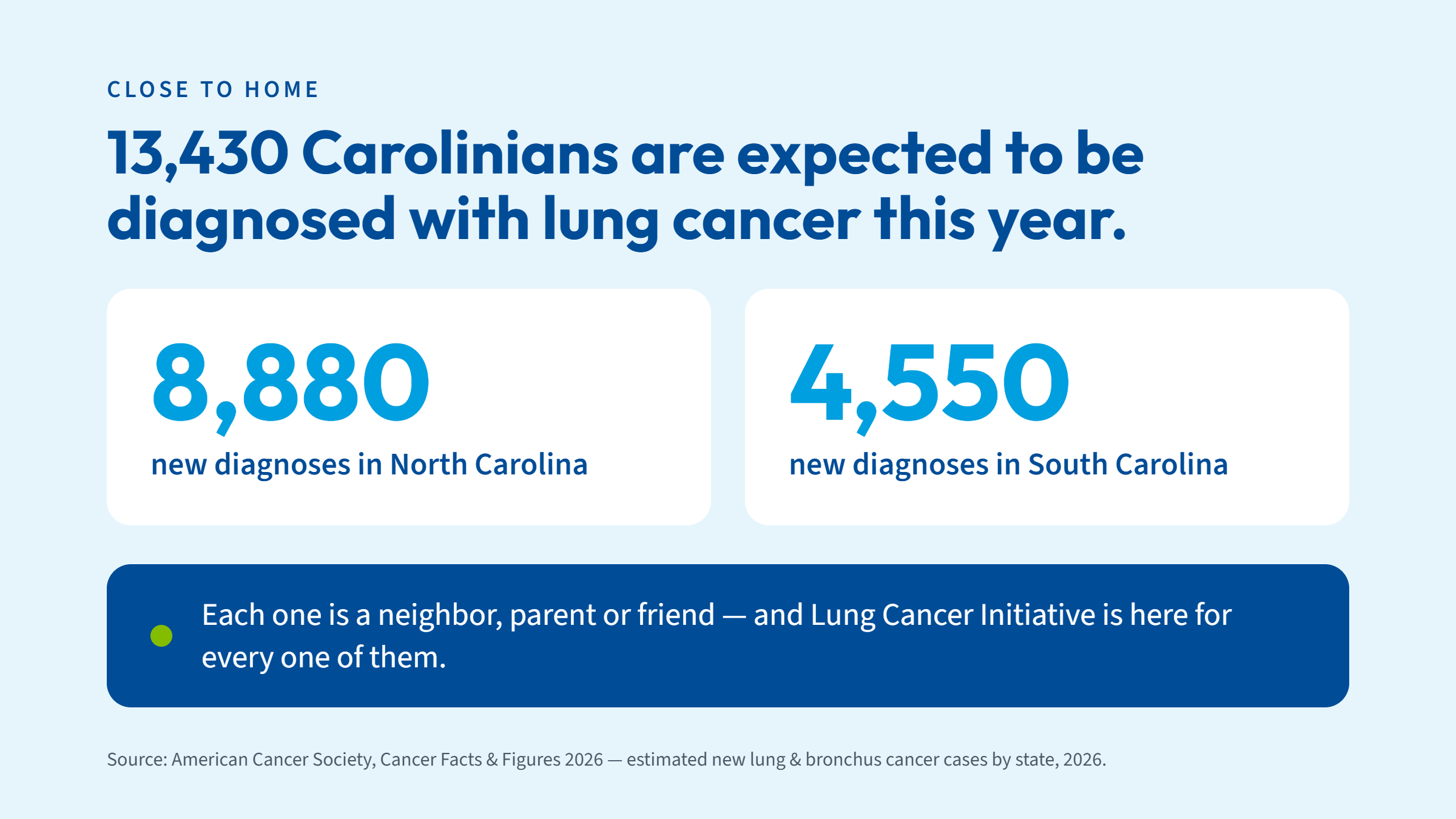
Those numbers are more than statistics. They are our neighbors in Asheville and Charleston, our parents in Raleigh and Rock Hill, our friends in small towns and big cities across both states. Each one of them deserves access to good care, clear information and a community that understands.
And there is real reason for hope. Survival is rising, and many survivors are already part of the LCI family, welcoming the next person who walks through the door.
Behind every survivor stands a care partner
No one lives with lung cancer alone. Behind nearly every survivor is a care partner: a spouse, a daughter, a son, a sibling or a close friend who drives to appointments, keeps track of medications, asks questions in the exam room and holds onto hope on the hard days.
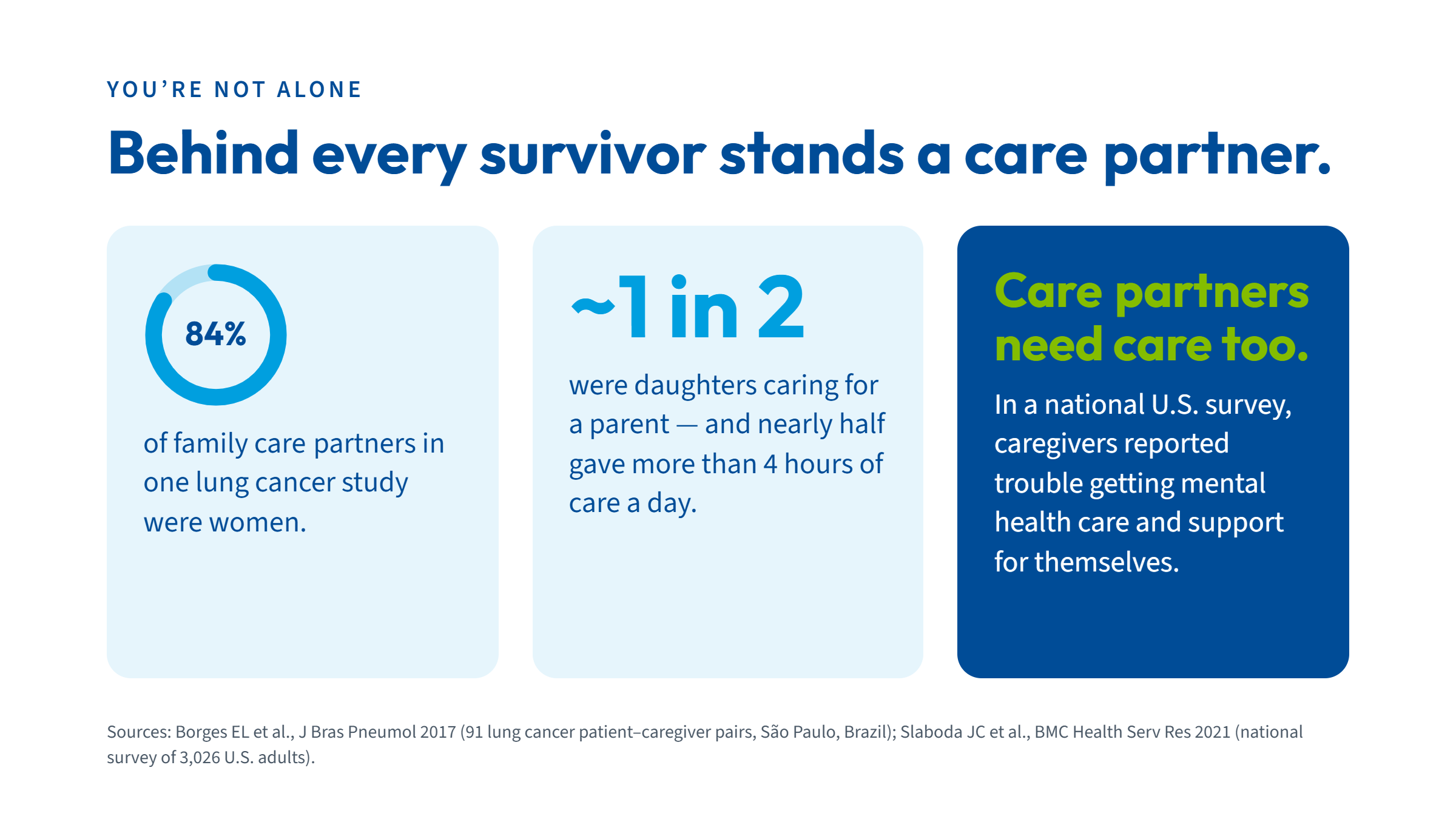
Research helps us see how much care partners give. In a study of 91 lung cancer patients and their family care partners, nearly half of care partners were daughters caring for a parent, and nearly half provided more than four hours of direct care every day, or about 28 hours a week (Borges et al., 2017).
The study also found that care partners’ own stress and quality of life were shaped more by how the patient was feeling day to day than by the stage of the cancer. That matters. It means that when we support a survivor’s quality of life, we are also supporting the person beside them. Survivors and care partners rise together.
Care partners need care too. Care partners in general report more difficulty getting mental health care, dental care, medications and support services at home for themselves (Slaboda et al., 2021).
To every care partner reading this: we see you. Your presence is part of every survivor’s story, and this community is here for you as well.
Find your community at LCI
Supporting survivors and care partners is at the heart of everything we do. Whether you were diagnosed yesterday or 20 years ago, you are welcome here.
Personal support from our Survivor Liaison
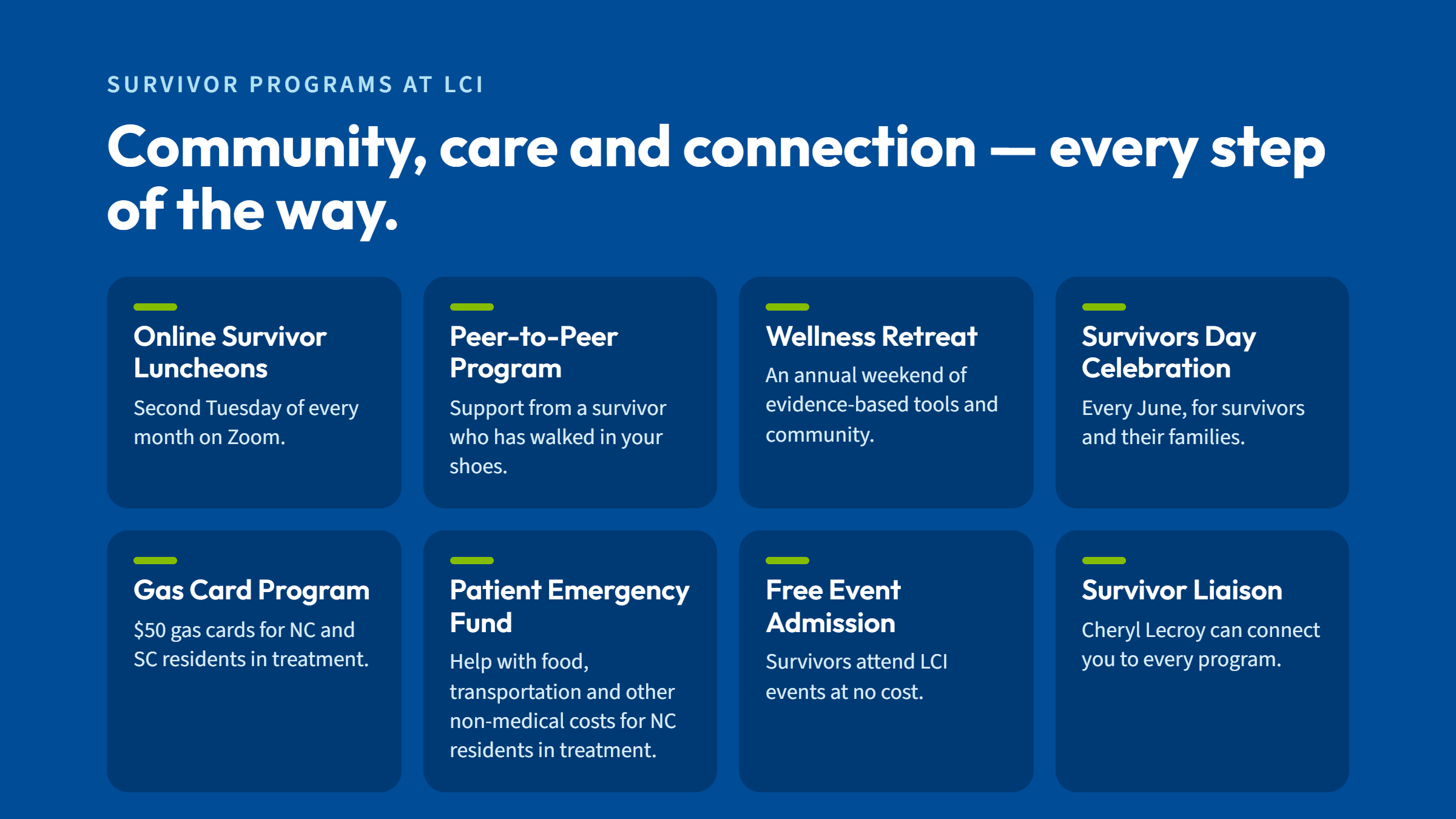
Your first point of connection is Cheryl Lecroy, LCI’s Survivor Liaison. When you or a loved one reaches out, Cheryl will contact you within 48 hours to offer personal, one-on-one support. She will listen to where you are in your journey, answer your questions and connect you with the programs and people who can help. You never have to figure out next steps on your own.
Get connected
Reach out to our Survivor Liaison, Cheryl Lecroy, or call our office at (919) 784-0410.
Nominate someone who inspires you
Our Annual Meeting is in March, and we want to honor the people who bring hope and action to our community. Do you know a survivor who lifts others up, a care partner who shows up every day, a clinician who goes the extra mile, a volunteer who gives their time or a researcher moving the science forward? We would love to celebrate them.
Ways to take action this November
Hope grows when we act on it together.
Connect
If you or someone you love has been diagnosed, reach out to our Survivor Liaison and join a monthly Online Survivor Luncheon.
Check in on a care partner
A meal, a ride or a simple text can mean more than you know.
Talk about screening
Ask your doctor whether lung cancer screening is right for you or someone you love.
Nominate
Recognize someone who brings hope to our community for an Annual Meeting award.
Share
Pass this post along so more people in the Carolinas know they are not alone.