
Lung Cancer Awareness Month, Week 3
Remarkable progress despite the funding gap
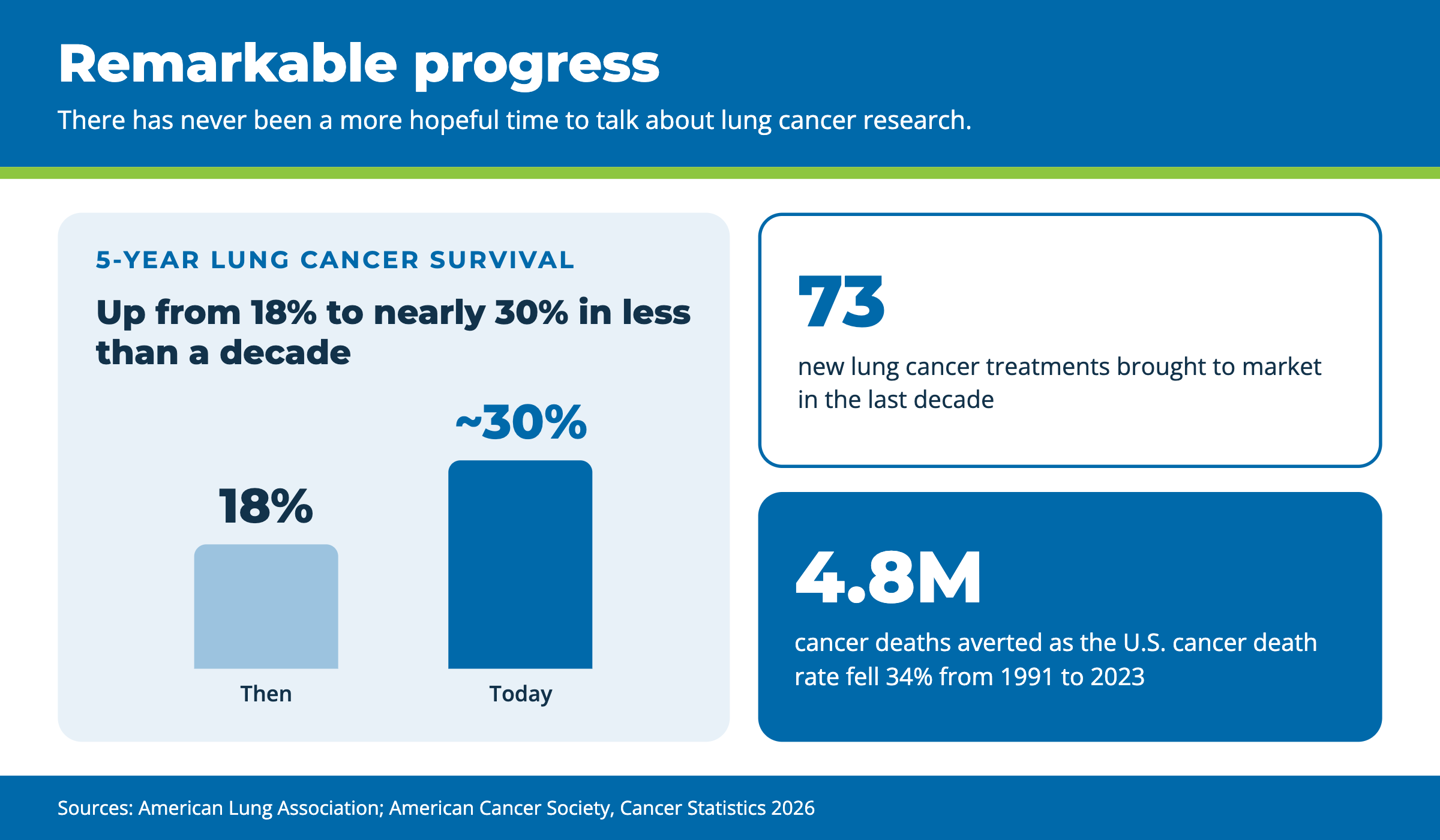
There has never been a more hopeful time to talk about lung cancer research. In less than a decade, the share of people alive five years after a lung cancer diagnosis has climbed from 18% to nearly 30%, with 73 new lung cancer treatments coming onto the market in the last decade alone (American Lung Association). Behind that number are thousands of people who are seeing graduations, weddings and ordinary Tuesdays they were once told they might miss.
That progress did not happen by chance. It came from decades of research, from clinical trial volunteers and from scientists who refused to accept the status quo. Yet lung cancer research remains underfunded compared with the toll the disease takes. This post looks at both sides of that story: how far we have come and why sustained investment matters now more than ever.
Remarkable progress
Across all cancers, the American Cancer Society’s Cancer Statistics 2026 report found that the U.S. cancer death rate fell 34% from 1991 to 2023, averting an estimated 4.8 million deaths. Lower smoking rates, earlier detection and better treatments such as immunotherapy all contributed (Cancer Research Institute).
There’s still room to grow
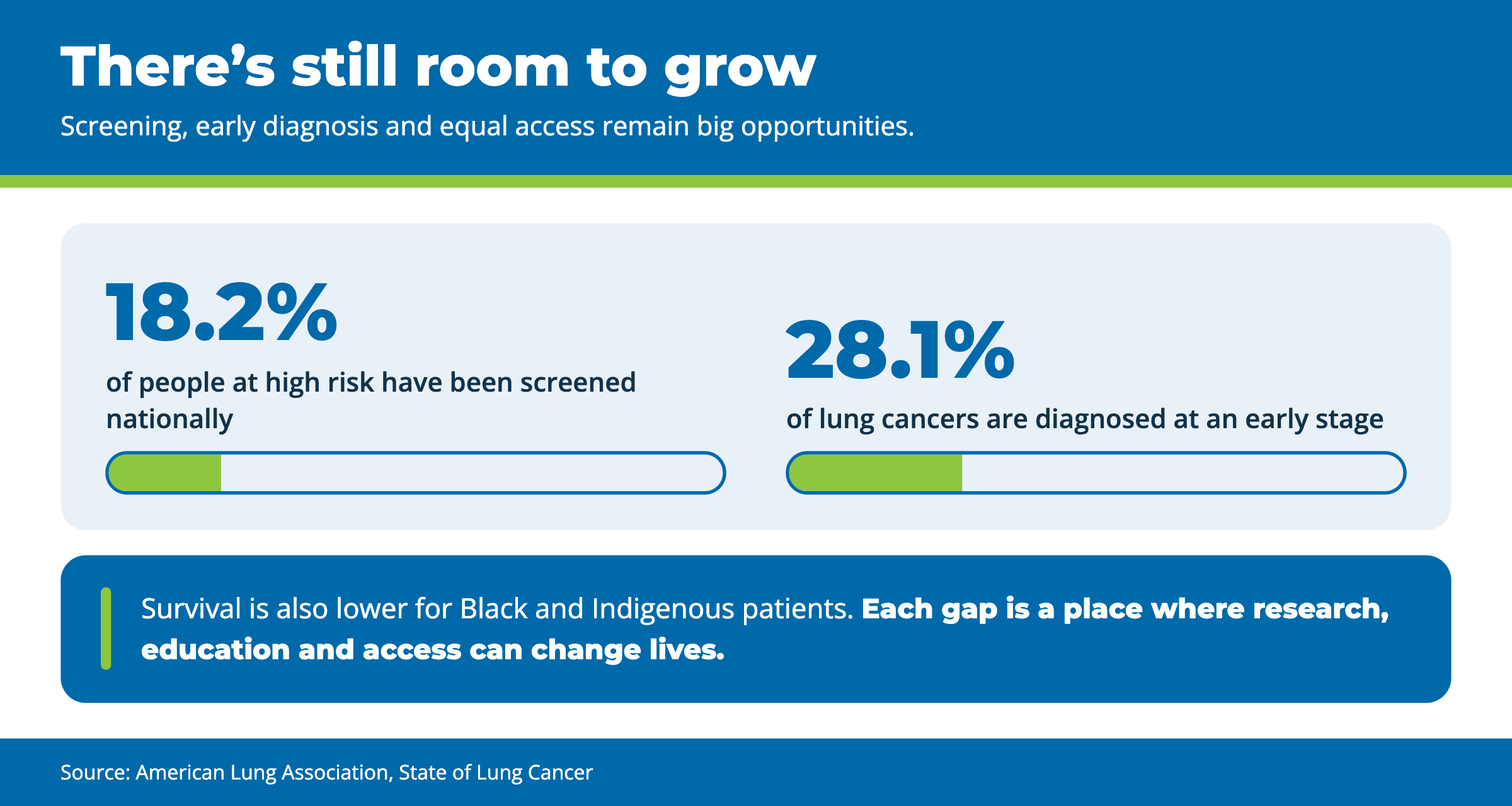
Only 18.2% of people at high risk were screened nationally, and only 28.1% of lung cancers are diagnosed at an early stage. Survival is also lower for Black and Indigenous patients than for white patients. Each of these gaps is a place where research, education and access can change lives.
How treatment is changing
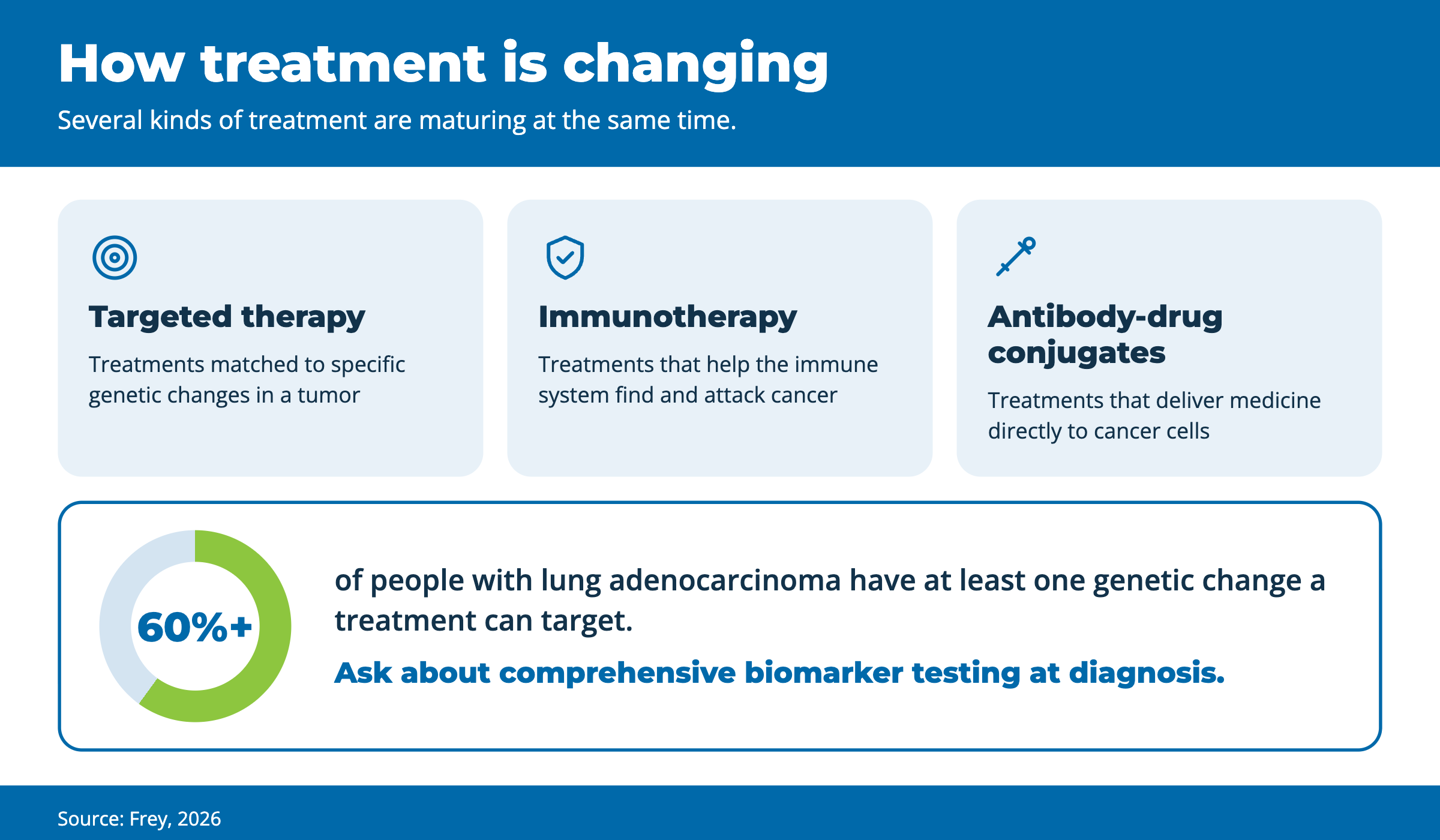
Lung cancer care has been transformed by several kinds of treatment maturing at the same time: targeted therapy, immunotherapy and antibody-drug conjugates. A 2026 review in Disease and Therapeutics notes that more than 60% of people with lung adenocarcinoma now have at least one genetic change that a treatment can target (Frey, 2026). That is why comprehensive biomarker testing at diagnosis matters so much.
Surgeons are seeing change too. The Society of Thoracic Surgeons’ 2026 Best of Lung Cancer Science series highlights how targeted therapy, dual-pathway immunotherapy and artificial intelligence are reshaping care across every stage of the disease.
The funding gap
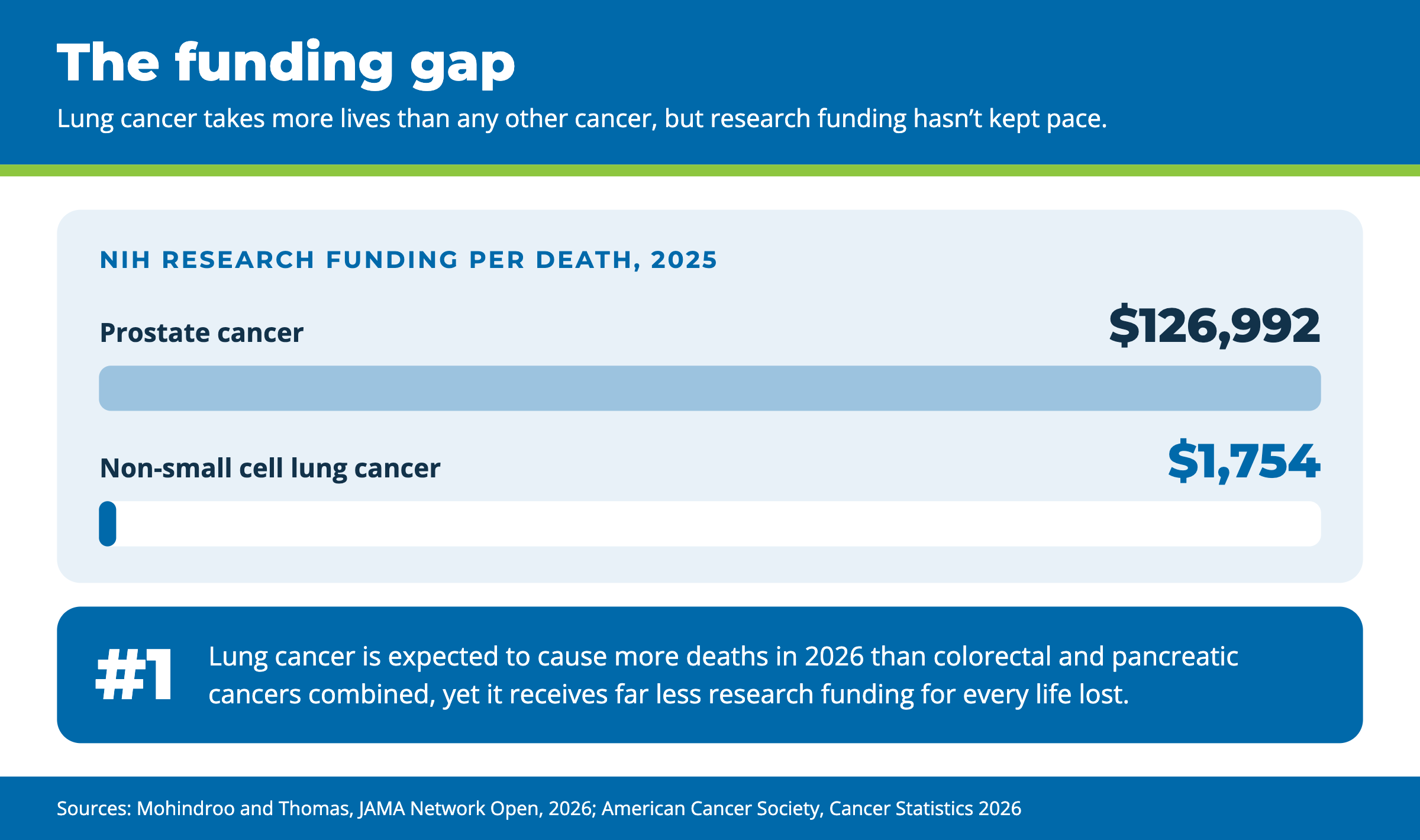
Lung cancer takes more lives than any other cancer, yet it receives far less research funding for every life lost. Lung cancer is expected to cause more deaths in 2026 than colorectal and pancreatic cancers combined (Cancer Research Institute).
The NCI estimated $435 million for lung cancer research in 2024 and $542 million for breast cancer. Yet lung cancer is expected to cause about 125,000 deaths in 2026, nearly three times the roughly 42,700 from breast cancer (American Cancer Society).
A 2026 study in JAMA Network Open by researchers at the National Cancer Institute makes the gap plain (Mohindroo and Thomas, 2026). For every estimated death in fiscal year 2025, non-small cell lung cancer received about $1,754 in NIH research funding, compared with $126,992 for prostate cancer.
The gap may be widening. The American Lung Association warns that recent funding and staffing cuts at NIH and CDC, along with cuts to Medicaid and Affordable Care Act coverage, could slow the progress described above (American Lung Association).
Every advance described here began as a research question that someone chose to fund. Closing the funding gap would mean more answers for small cell lung cancer, better options when treatments stop working and wider access to screening and biomarker testing in every community.
Investing in the next generation of researchers
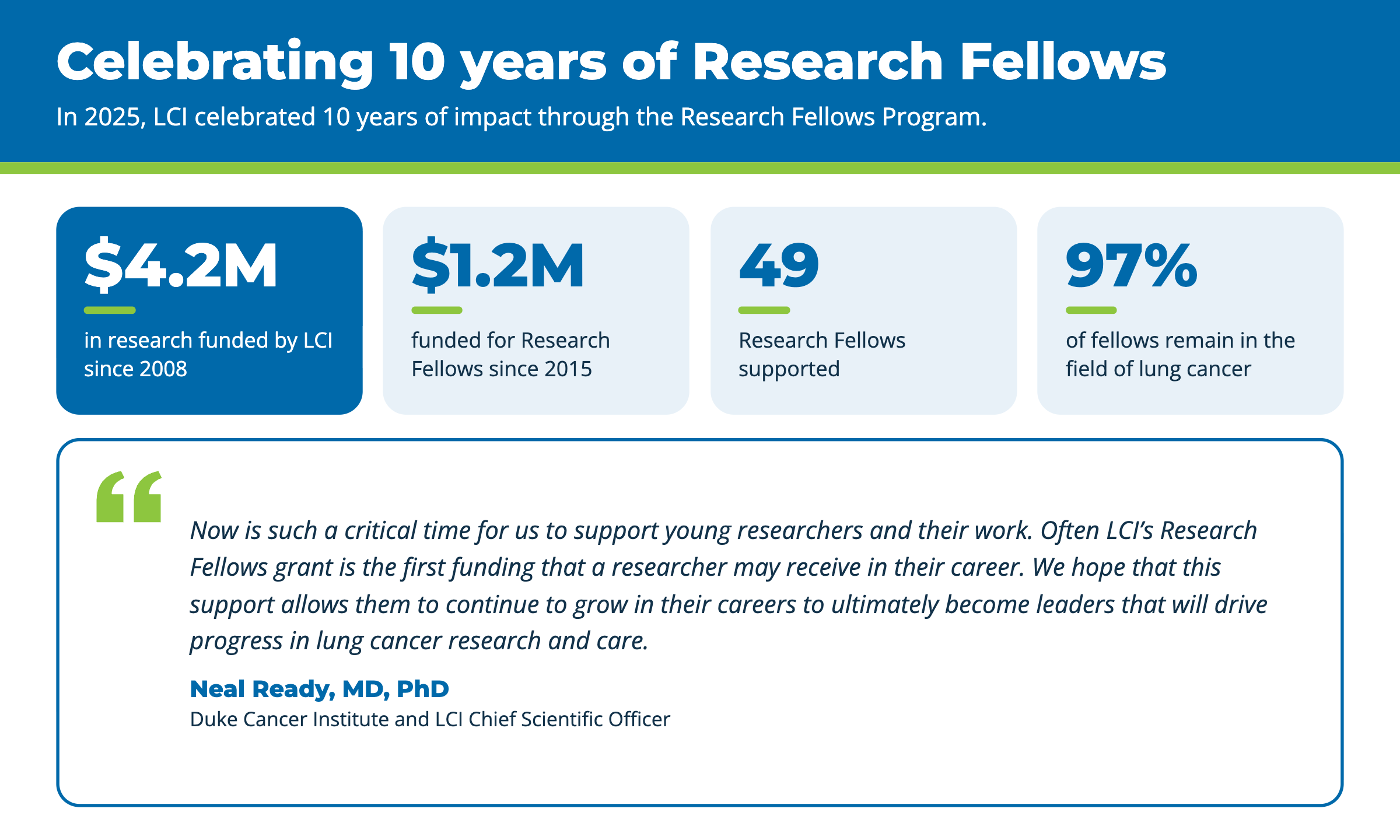
In 2025, LCI celebrated 10 years of impact through the Research Fellows Program. This year, LCI awarded $125,000 to five Research Fellows advancing lung cancer care across the Carolinas.
How you can help keep the momentum going
The science is moving faster than ever. With sustained investment and a community that keeps showing up, the next decade of progress can reach even more people.
Talk about screening
Talk to your doctor about screening if you have a history of smoking, and share what you learn with the people you love.
Ask about biomarker testing
Ask about comprehensive biomarker testing after any lung cancer diagnosis, at any stage.
Learn about clinical trials
Trial volunteers made every breakthrough on this page possible.
Speak up for research
Tell your elected officials that steady funding for lung cancer research saves lives.
Support patient programs
Support research and survivorship programs that put patients and families at the center.
Nominate a provider
Nominate a provider for Healthcare Professional of the Year at our Annual Meeting.
Stay connected
Follow us for updates, survivor stories, events and moments of hope, and check back next week for our post celebrating survivors and care partners. You can also find everything for the month in our LCAM Guide and support our work through our merch store.