
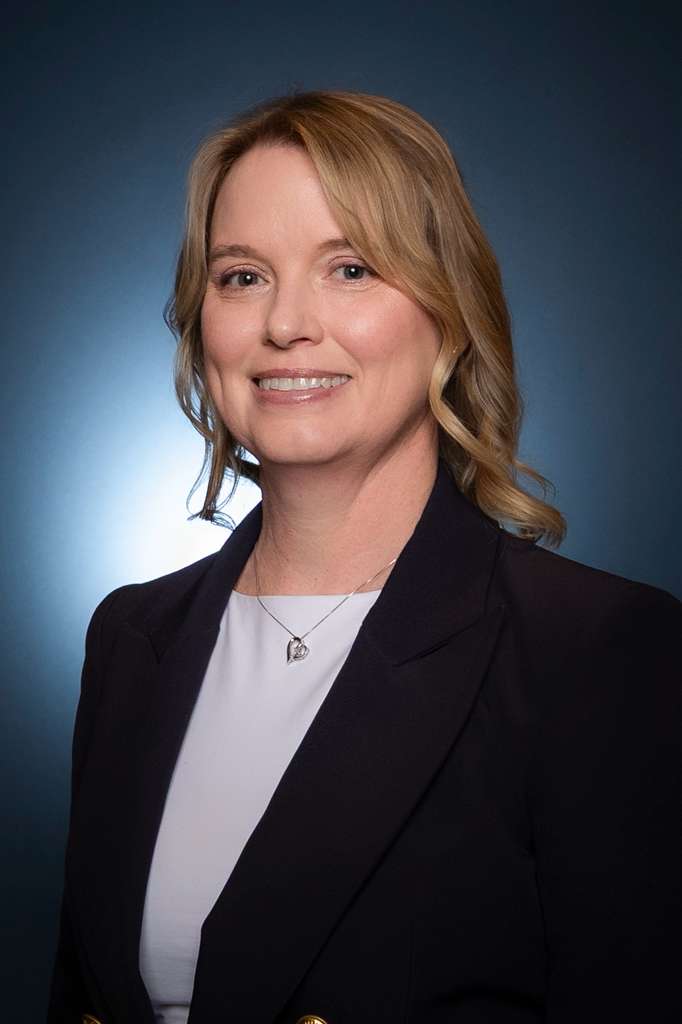
My cancer story actually started in August of 2021, with what I thought would be a routine mammogram. My doctor saw something in my breast he wanted to look at more closely, so he ordered a CT scan. The CT didn’t show anything concerning in my breast. But it did show something in my lungs, which was hard to make sense of because I felt completely fine and had no symptoms.
I started researching what kind of doctor I needed. Apparently, “lung doctor” is not the official title. That is how I found my pulmonologist, who according to Google and just about every other report I could find, was the best in Raleigh. And I have to say, I agree.
He ordered bloodwork and more imaging. Everything in my bloodwork came back normal. You would think that would have made me feel better, but it didn’t. The CT showed nodules throughout my lungs, and because they were so small, getting a biopsy was difficult. So for about six months, we watched them.
Around that time, a friend said something to me that stayed with me: “You can’t control what’s happening inside your body. But you can control what you do to take care of yourself.” So I focused on what I could control. I took care of myself, did what I could to stay healthy, and for everything else, I had to wait.
In February of 2022, we finally did the biopsy. Not because something had changed, but because after months of watching the nodules, we still didn’t know what they were.
A few days later, I was having dinner with my family when I got a notification from MyChart. I love MyChart. I really do. But there are definitely times when maybe we don’t need our pathology results with dinner.
My partner and my kids were downstairs while I went upstairs alone and opened the report. Lung cancer. Non-small cell adenocarcinoma. I remember sitting there in shock. I understood what the report said, but I had no idea what it meant for my life or what came next. I had my partner look at the results with me that night because I needed someone else there in that moment.
The next day, my pulmonologist called me. I stepped outside to take the call, and I was standing there by myself when he told me it was Stage 4. Once I heard “Stage 4,” I really didn’t hear much after that. There is no Stage 5. So to me, Stage 4 meant death was coming.
He referred me to an oncologist, who is also with UNC. It was about three weeks before I could see him.
My mind went straight to my kids. I have two sons and a daughter, and I kept thinking about all the things I might miss. Graduations. Weddings. The moments when they would need their mom. My daughter’s dad had passed away in 2020. There were times I would look at her and turn away because I didn’t want her to see me cry. I couldn’t stop thinking about the possibility that she could lose both of her parents while she was still young. And then I thought about my sons. Would they suddenly feel responsible for stepping in and taking care of their sister because I wasn’t there? That was a lot to carry.
By the time I saw my oncologist, I was ready to fight. Give me medicine. Do surgery. Tell me how we make this go away.
He explained that there were genetic mutations in the cancer, and because of those mutations, chemotherapy was not going to be one of my treatment options. His recommendation was surveillance. I had walked into that appointment ready for a battle plan. Instead, the plan was to watch and wait. That was definitely not the motivational speech I had prepared myself for.
He explained that treatment would be there when I needed it and that lung cancer treatments continued to change. But what I heard was: We are doing nothing. And to me, doing nothing felt like giving up.
That started what I call the dark days of cancer. I was angry. I was afraid. I cried a lot. I became cynical. I worked in HR, so people came to me with problems every day. I would listen and think, “Do you understand how small this is in the big picture?” That wasn’t fair, but cancer had changed the way I saw everything.
It made me question things I had never really thought about before. Do I keep contributing to my 401(k)? Am I going to live long enough to use it? Would my partner and I ever get married? Would I meet my grandchildren? What would my kids remember about me?
I also wasn’t convinced surveillance was the right answer. So I got other opinions. Johns Hopkins. Duke. I even had an appointment with MD Anderson. I wanted someone to tell me something different. But overall, they really didn’t. I realized I needed a doctor I trusted. So I went back to my oncologist, and I’m very grateful that I did.
Emotionally, though, I was still struggling. Then, in October of 2022, I went to the North Carolina SHRM conference. One of the keynote speakers was talking about resilience. At that point, I was not exactly the poster child for resilience. I remember thinking, “This is lovely, but clearly you have not met my current attitude.” Then he mentioned cancer. And I started listening differently.
Afterward, I did something that really isn’t like me. I walked up and told him I had lung cancer. He introduced me to his childhood friend, who also had lung cancer.
That conversation didn’t take away my cancer or my fear. But for the first time in a while, I felt understood. His friend talked to me about the importance of my attitude and reminded me that treatments for lung cancer were continuing to improve. He also gave me permission to feel the fear, the anger, and the sadness. I didn’t have to pretend everything was okay in order to be positive.
He told me he had made some big changes in his own life. He had basically blown it up and stopped holding onto the things that weren’t making him happy. And he told me he was the happiest he had ever been. I remember thinking, I want that too. I deserve to be happy.
I left that conversation feeling lighter than I had in a long time. And I knew that if I ever had the chance to make someone else feel that way, I wanted to. We still keep in touch and text every Christmas.
That conversation changed something in me. I left a job I didn’t love. I married the love of my life. I became more intentional about telling my kids how much I love them. And I started looking for ways to show up for other people, whether that meant volunteering, serving, listening, or simply being there.
Then, in 2024, cancer gave me something else to process. As genetic testing advanced, a blood sample I had already given was tested again. This time, they found a genetic marker connected to lung cancer that hadn’t been identified when I was first diagnosed.
That immediately made me think about my Grandma Skillin. She had died from lung cancer, and like me, she was a non-smoker. Then my mind went to my family. My children. My granddaughter. My siblings. What could this mean for them?
Having those conversations was hard. But it brought me back to something I had been learning throughout this journey: I can’t control everything that happens. I can only control what I do with the information I have.
Today, I’m still on surveillance. And when I look at my life now, I see so many of the things I once feared I wouldn’t be here for. My daughter is a senior in high school. I get to watch my sons continue to grow and move through their own lives. I have a granddaughter who brings me more joy than I can explain. And I get to experience all of it with my husband. Those are the moments that matter to me. And I don’t take them for granted.
That doesn’t mean I never get scared. I still get scanxiety before every scan, and if I get a cough from a cold, there is always that thought: Has something changed? But I handle that fear differently now. I breathe. I count. And I remind myself that if something has changed, we will make a plan.
When I was first diagnosed, I thought fighting cancer meant doing something to the cancer. Medicine. Surgery. Whatever it took to make it go away. I don’t see fighting the same way anymore. For me, fighting also means taking care of myself, making a plan when I need one, and continuing to live the life in front of me.
And I haven’t done that alone. There have been people along the way who listened, understood, and made the hard moments feel a little lighter. Some of them are people I love. And some are people I never expected to meet.
We can’t always fix what someone else is going through. But we can listen. We can show up.
Hold close the people who help you feel heard, cared for, and a little lighter. And when you can, be that person for someone else.