
Lung Cancer Awareness Month, Week 2
Taking care of your lungs is one of the most hopeful things you can do for your future. A yearly lung screening is quick, painless and can find changes early, when they’re most treatable. If you’ve wondered whether screening is right for you, what happens at the appointment or how to lower your risk, you’re in the right place.
Why early detection matters
Early detection changes everything. Because symptoms often don’t appear until later, screening is one of the most powerful tools we have.
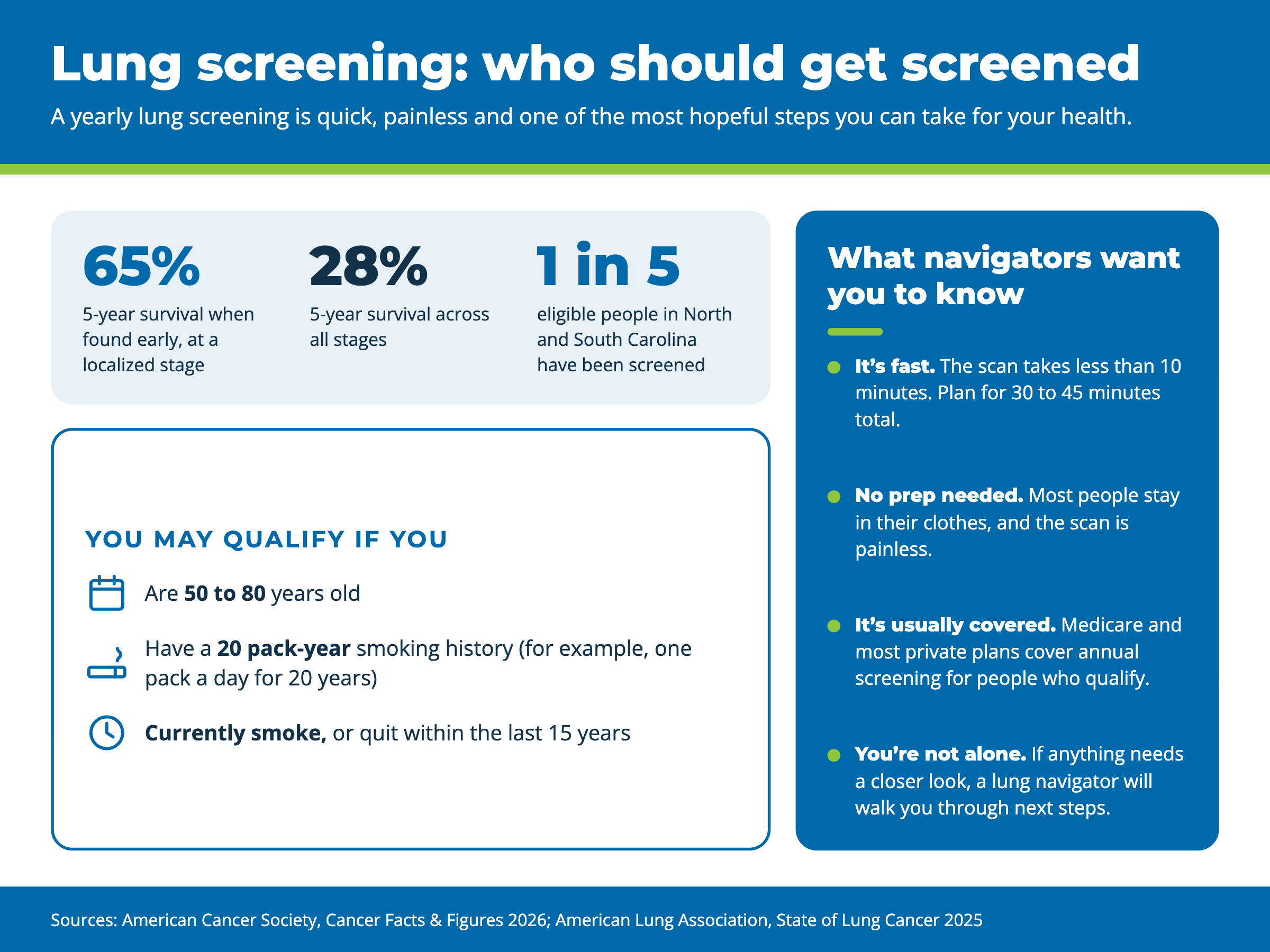
Yet in North Carolina, only 19.2% of eligible individuals have been screened, and in South Carolina, only 18.8%. That means about 4 in 5 people who could benefit from screening haven’t had one yet.
Sources: American Cancer Society, Cancer Facts & Figures 2026; American Lung Association, State of Lung Cancer 2025
Who should get screened?
You may qualify for an annual lung screening if you are 50 to 80 years old, have a 20 pack-year smoking history (for example, one pack a day for 20 years, or two packs a day for 10 years) and currently smoke or quit within the last 15 years.
What to expect at your screening
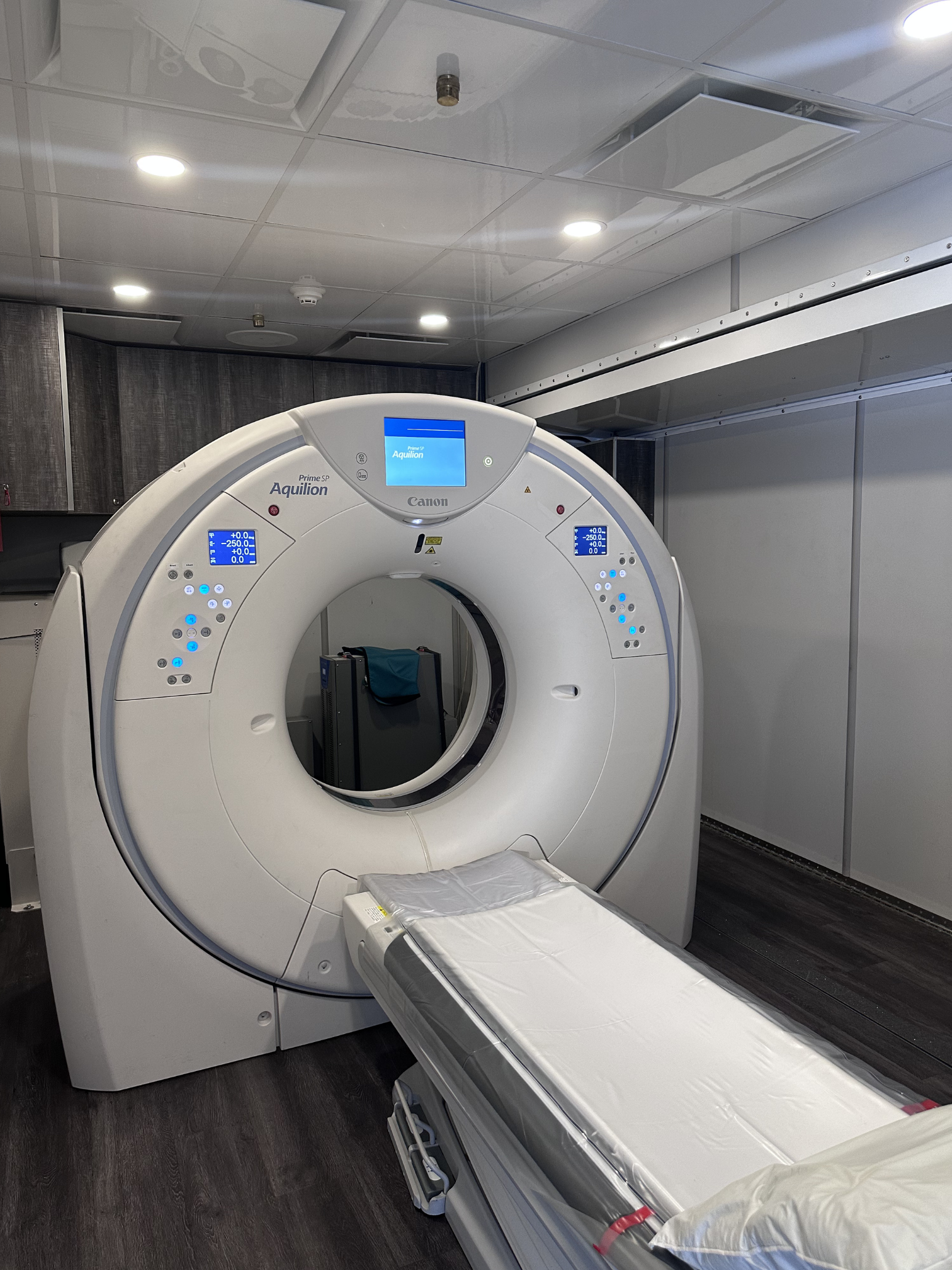
A lung screening takes less time than a lunch break. Here’s what navigators want you to know.
Have more questions? Lung navigators at our partner health systems answered the ones they hear most in All Your Lung Screening Questions Answered.
Simple steps to lower your risk
Screening helps find lung cancer early. Prevention helps lower the chance of it developing at all. Quitting smoking and testing your home for radon are two of the most significant and actionable steps you can take.
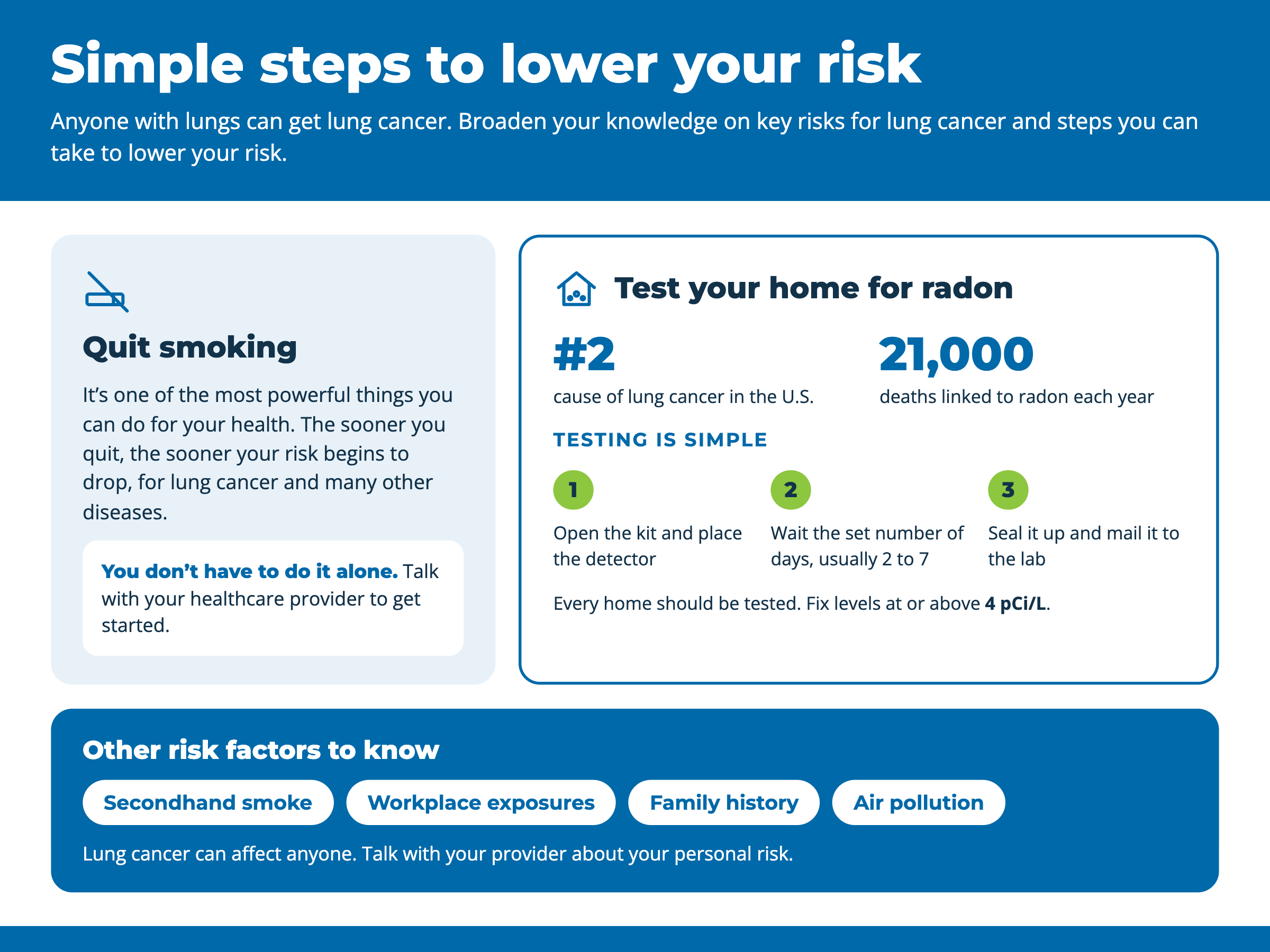
Get a radon test kit from your state
You can find more information through your state’s radon program, which often includes free test kits for homeowners.
North Carolina Radon Program →South Carolina Radon Program →
Other risk factors to know
Lung cancer can affect anyone, including people who have never smoked. Smoking history is what screening guidelines look at, but other factors that can affect your lung health include:
- Secondhand smoke at home, at work or in the car
- Workplace exposures, such as asbestos, arsenic, diesel exhaust, silica and chromium
- Air pollution where you live or work
- Private well water that contains arsenic or radon
- A personal or family history of lung cancer in a parent, sibling or child
- Past radiation therapy to the chest
These factors don’t change who qualifies for screening under current guidelines, but they’re important for your care team to know. If any of them apply to you, talk with your healthcare provider about your personal risk.
About Screening Saves
Knowing can feel like a breath of fresh air. A lung screening can give you answers, peace of mind and the chance to take action early if needed.
Through Screening Saves, Lung Cancer Initiative is building a network across the Carolinas that connects lung navigators, healthcare providers, screening centers and community partners. Together, we’re reducing barriers, strengthening referrals and helping more people get screened and follow through on their care, so everyone has equitable access to early detection.
Since the launch of Screening Saves in 2025, as of October 2026
Growing access across the Carolinas
- Continued our pilot with ECU Health and launched a new pilot with FirstHealth of the Carolinas to increase lung screening in the Sandhills region
- Began primary care clinic visits with both health systems
- Hosted quarterly Navigator Network meetings supporting 100+ screening professionals
- Established the first lung screening–specific Project ECHO to further provider education, in partnership with the American Cancer Society
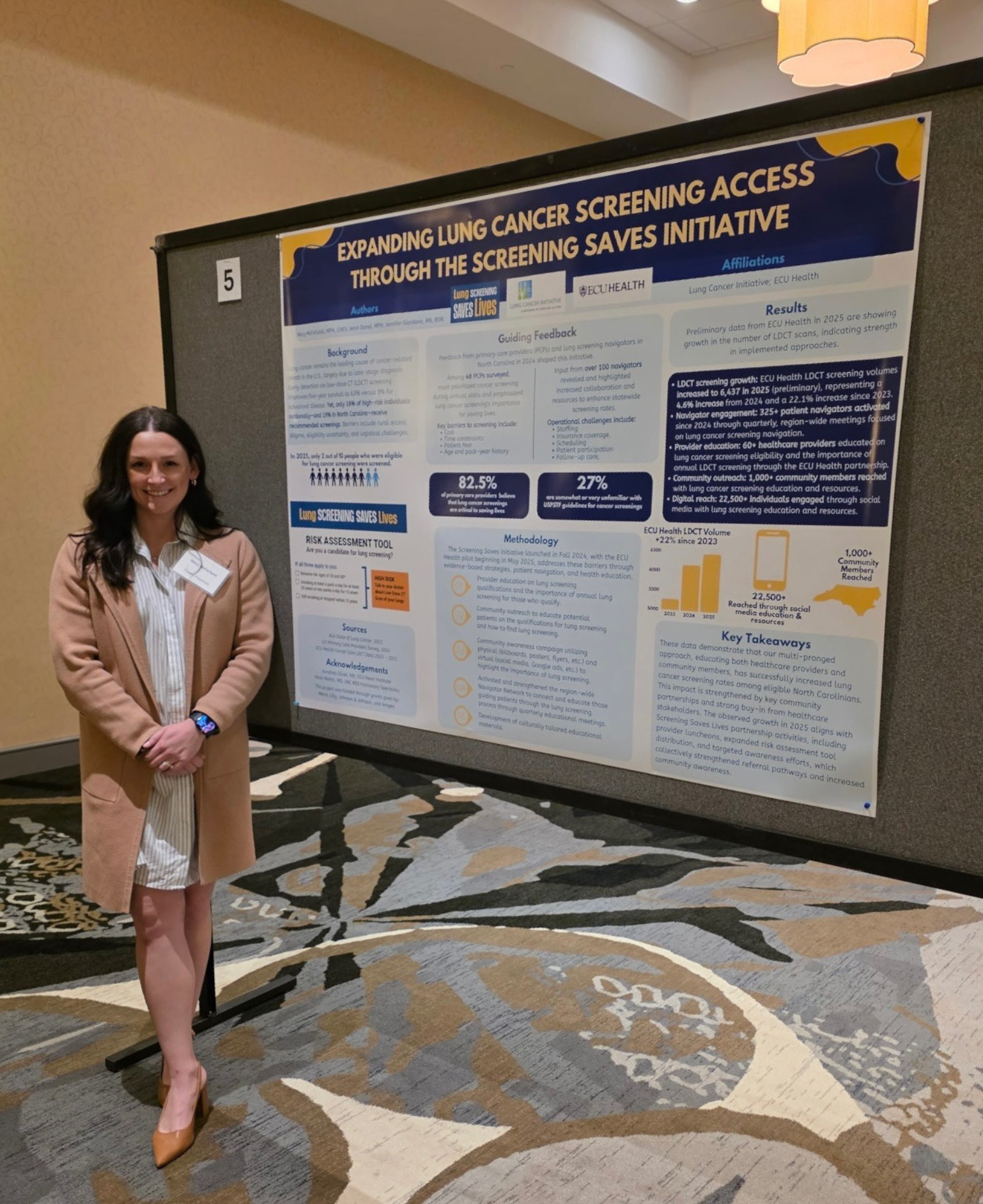
- Presented at regional and national conferences, including to 300+ attendees at the NC Community Health Center Association Primary Care Conference
Lung Screening Navigator Network members
Learn more about Screening Saves
Find out who qualifies, what to expect and how to get started. Healthcare providers: find tools to support your patients in our Lung Screening Saves Lives resources.
Take the next step
A lung screening takes less time than a lunch break, and it could make all the difference. If you’re 50 to 80 and have a history of smoking, ask your provider about lung screening at your next visit. And if someone you love might qualify, share this post with them. Early detection is a gift you can give yourself and the people who count on you.
Follow us all month for daily posts, survivor stories and ways to get involved, and check back next week for our post on research.